info@triniteconsulting.com
 +1 (224) 385 9760

Your IT budget may look reasonable when individual expenses are reviewed. A software renewal here, additional cloud resources there, and ongoing maintenance and support costs. Each expense may be justified on its own. But when was the last time your business evaluated whether these investments were delivering the value expected?
The challenge isn't always excessive IT spending. It's identifying where money is being spent unnecessarily, which investments are still essential, and whether existing resources are being used effectively.
An IT budget review should therefore go beyond software licenses and infrastructure costs. It should also examine how business systems are maintained, how applications work together, and whether the technology services supporting these operations are aligned with current business requirements.
Gartner's July 2026 forecast projects worldwide IT spending to reach $6.37 trillion in 2026. But increasing technology investment doesn't automatically lead to better business performance. What matters is how effectively that investment supports operations, productivity, and long-term business priorities.
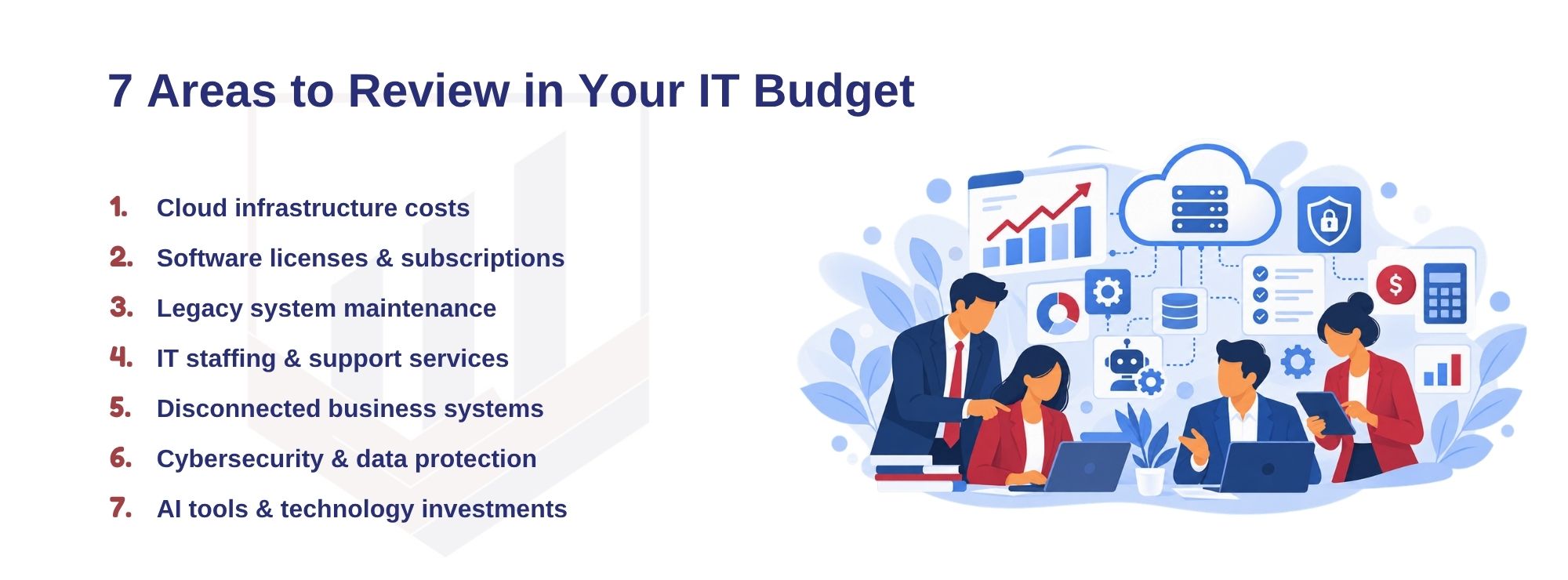
Here are seven areas businesses should review to identify unnecessary costs, improve spending visibility, and make more informed IT budget decisions.
1. Cloud Infrastructure and Storage Costs
Cloud services allow businesses to scale computing resources, store information, and access applications without maintaining extensive physical infrastructure.
However, the flexibility of cloud platforms can also make spending difficult to control.
Cloud environments frequently contain resources that are no longer required. Development servers may remain active after projects are completed. Storage volumes may continue growing without regular reviews. Businesses may also pay for computing capacity that exceeds their actual requirements.
According to Flexera's 2026 State of the Cloud report, surveyed organizations estimated that approximately 29% of infrastructure-as-a-service and platform-as-a-service spending was wasted.
Although actual waste varies between organizations, the finding highlights the importance of cloud cost management.
What businesses should review:
- Cloud resources with consistently low utilization
- Storage allocated to outdated or unnecessary information
- Development and testing environments that remain active when not needed
- Unexpected data transfer and additional service charges
- Pricing plans that do not match actual usage
Businesses should compare cloud spending against utilization and operational requirements.
Regular monitoring, appropriate resource sizing, and clear ownership of cloud environments can help maintain better cost control.
The objective should be to ensure that cloud spending supports business requirements rather than simply reducing available capacity.
2. Software Licenses and Recurring Subscriptions
Software subscriptions are among the easiest IT expenses to overlook.
Businesses often introduce applications to address specific departmental needs. Over time, multiple teams may subscribe to different products with similar capabilities.
Some applications remain active even after employees leave or business requirements change. Others are renewed automatically without evaluating whether the organization still needs them.
Subscription-based pricing can make individual purchases appear affordable, while their combined annual cost becomes significant.
Zylo's 2026 SaaS Management Index identifies unused software licenses, overlapping applications, and consumption-based charges as important factors affecting software spending.
What businesses should review:
- Software subscriptions with limited active usage
- Multiple applications performing similar functions
- Premium licenses assigned to employees who do not need advanced features
- Automatically renewing subscriptions
- Licensing costs associated with former employees or discontinued projects
A centralized software inventory can provide visibility into recurring expenses.
Businesses should also establish responsibility for monitoring renewal dates, approving new applications, and evaluating existing licenses.
Consolidating suitable applications and adjusting license allocations can help control costs without compromising productivity.
3. Legacy Systems and Technology Maintenance
Older technology systems can represent a substantial portion of an organization's ongoing IT expenditure.
Although the initial investment may have been recovered years earlier, maintenance requirements continue.
Legacy applications may require specialized technical support, frequent troubleshooting, custom modifications, and additional integration work.
As technology evolves, older systems can also become increasingly difficult to connect with modern applications.
These limitations may affect operational efficiency and restrict opportunities for automation.
The US Government Accountability Office has documented how outdated systems can create maintenance difficulties, compatibility challenges, and cybersecurity risks in federal technology environments. While those findings cannot be applied directly to every private business, the underlying risks are relevant when evaluating aging infrastructure.
What businesses should review:
- Annual maintenance and support expenses
- Frequency of system failures and technical issues
- Costs associated with custom development and modifications
- Compatibility with current business applications
- Security vulnerabilities and unsupported technologies
Replacing every older system is not necessarily a sensible financial decision.
Businesses should compare the cost of maintaining existing technology with the investment required for modernization.
In some cases, targeted upgrades or improved integrations may be more economical than complete replacement.
The priority should be identifying systems whose ongoing costs and limitations outweigh their business value.
4. IsT Staffing, Outsourcing, and Support Services
Technology-related personnel expenses extend beyond salaries.
Recruitment, employee benefits, training, specialized certifications, contractor fees, and management overhead all contribute to the total cost of maintaining IT capabilities.
Businesses also face an important resource planning challenge.
Some technology functions require continuous attention, while others involve temporary projects or specialized expertise needed only periodically.
Maintaining a permanent internal team for every technical requirement may not always be financially practical.
For example, a business may need ongoing infrastructure administration but require application development, data analysis, software testing, or system enhancements only when specific projects arise.
What businesses should review:
- The actual workload assigned to internal technology teams
- Whether specialist resources are required continuously or periodically
- Costs associated with recruitment, training, and employee turnover
- External support agreements and service utilization
- Opportunities to improve resource allocation
Different delivery models can support different requirements.
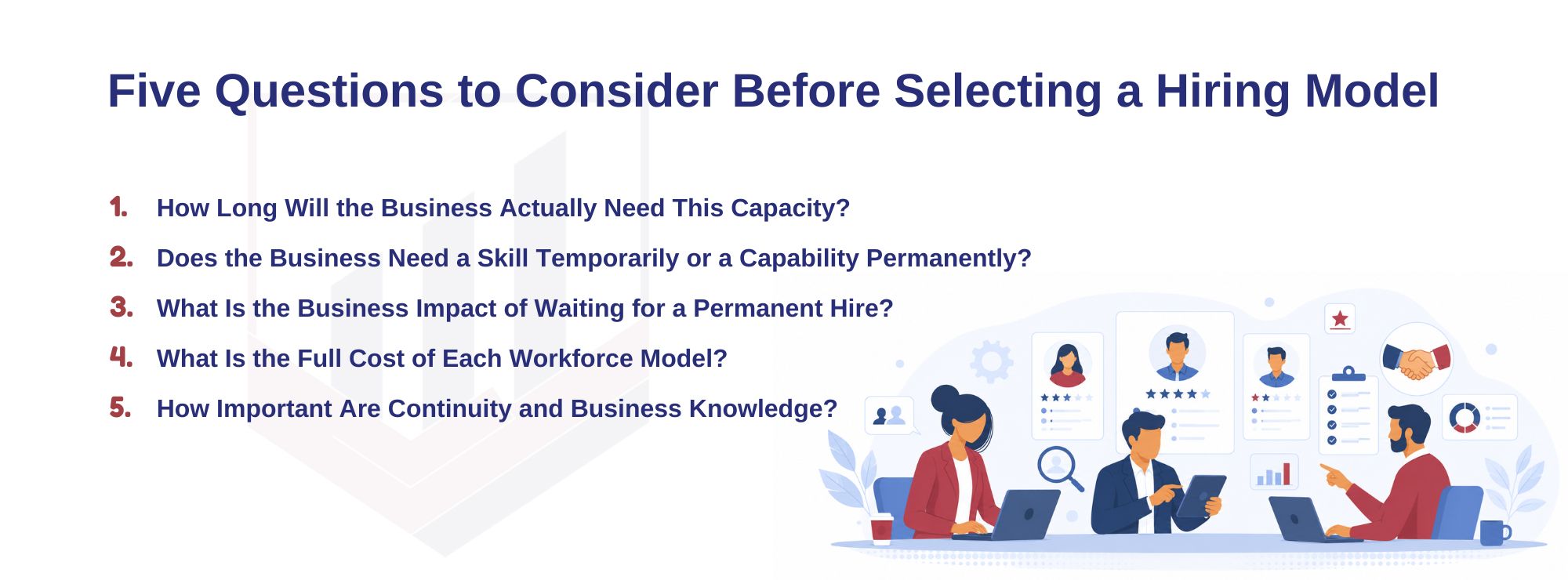
Permanent employees provide continuity and organizational knowledge. Project-based specialists can support defined initiatives, while managed services can provide ongoing assistance under agreed service expectations.
The right model depends on workload, operational risk, required expertise, and the organization's ability to manage service providers.
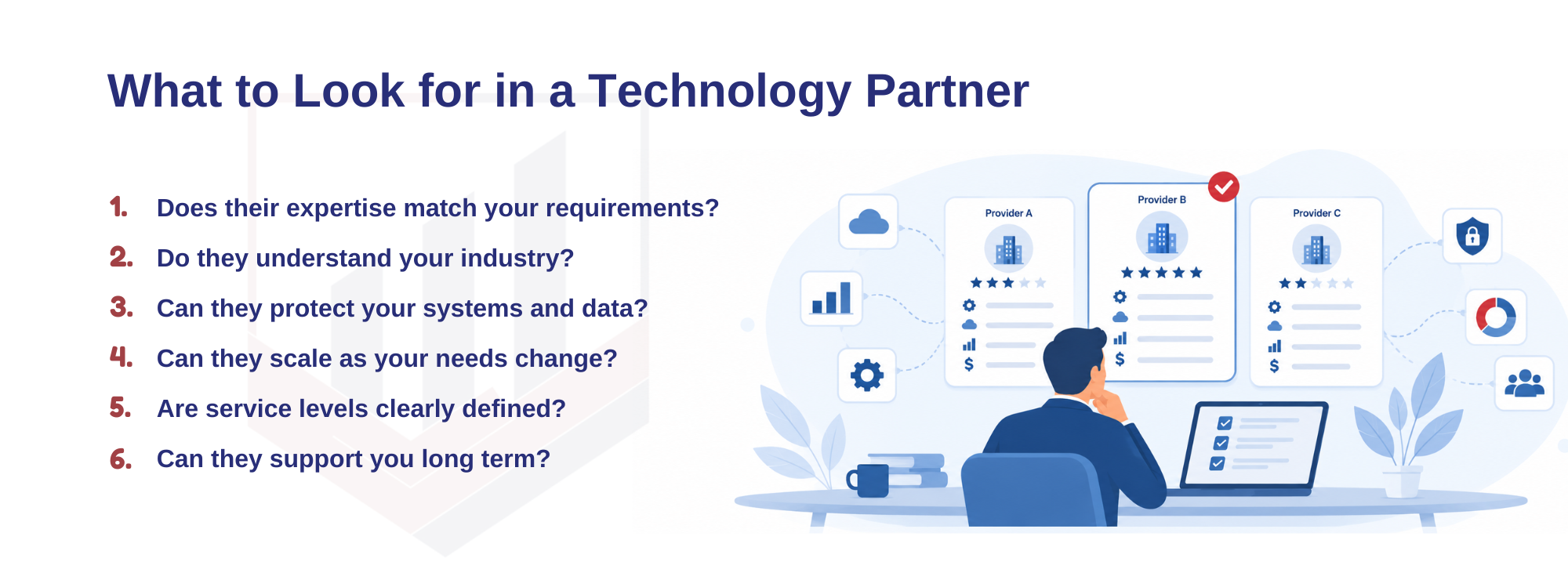
Businesses should evaluate the total cost and effectiveness of each arrangement rather than focusing exclusively on hourly rates or salaries. When considering external support, understanding how to choose the right technology partner can help businesses assess technical expertise, service expectations, scalability, and the suitability of different engagement models.
5. Disconnected Business Systems and Manual Processes
Not every IT-related cost appears directly in the technology budget.
Some costs are hidden within day-to-day operations.
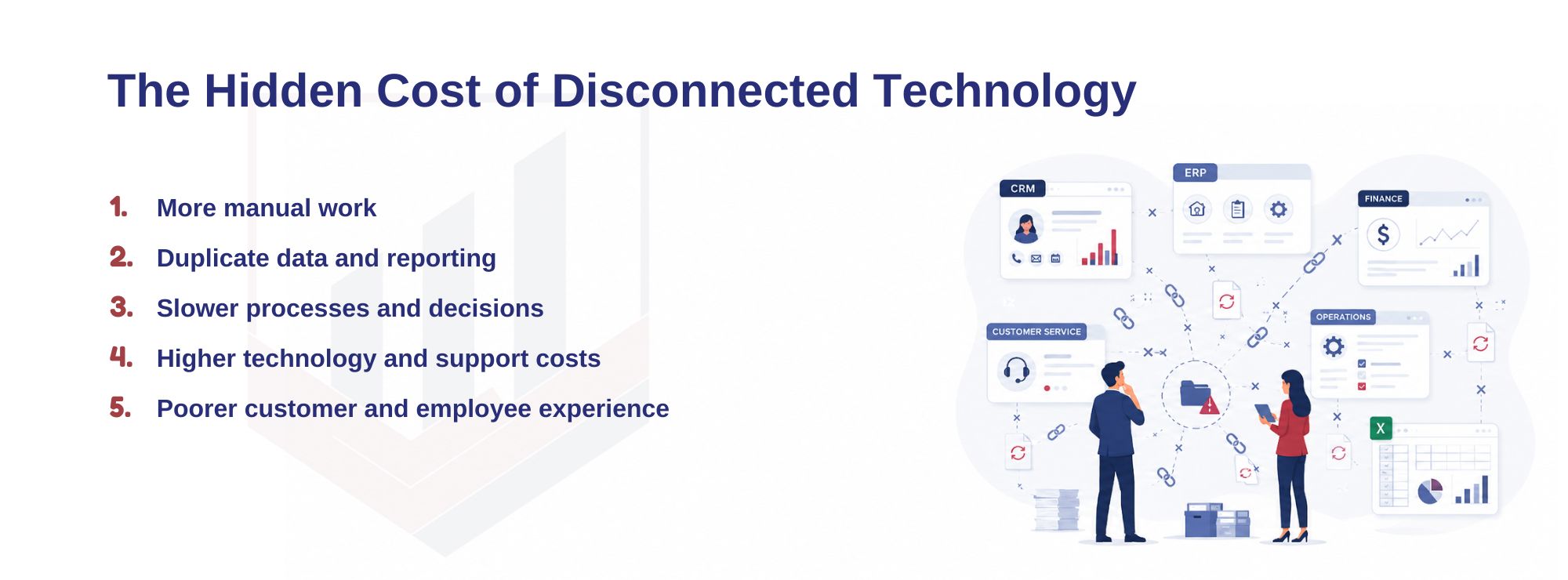
When business applications do not communicate effectively, employees may spend considerable time transferring information between systems, preparing duplicate reports, correcting inconsistent records, or performing repetitive administrative tasks.
These activities consume working hours that could otherwise support more valuable business functions.
For example, a company may use separate applications for customer management, finance, operations, and reporting.
If information cannot move reliably between these applications, employees may need to update multiple systems manually.
Over time, these processes can increase administrative workloads and create opportunities for errors.
Businesses should examine the hidden costs of disconnected business systems when assessing technology spending.
What businesses should review:
- Repeated manual data entry across applications
- Duplicate reporting and administrative activities
- Delays caused by disconnected workflows
- Time spent correcting inconsistent information
- Opportunities for system integration and automation
A process review can help identify where employees are compensating for technology limitations.
Improving integrations, standardizing information, and automating selected activities may reduce unnecessary workloads.
The financial benefit should be evaluated through measurable improvements in processing time, accuracy, and operational efficiency.
6. Cybersecurity, Data Protection, and Business Continuity
Cybersecurity is an essential component of IT spending, but businesses sometimes evaluate it primarily as an operational expense.
This approach overlooks the financial consequences of inadequate protection.
Security incidents can disrupt operations, affect customer confidence, require extensive recovery work, and create legal or regulatory obligations.
IBM's 2025 Cost of a Data Breach report estimated the global average cost of a data breach at $4.44 million among the incidents studied.
This figure should not be interpreted as the expected cost of a breach for every business. The actual financial impact depends on factors such as organizational size, incident severity, industry, and recovery requirements.
Nevertheless, the research illustrates why cybersecurity deserves appropriate financial planning.
What businesses should review:
- Existing cybersecurity tools and their effectiveness
- Access controls and authentication practices
- Data backup and recovery capabilities
- Employee security awareness
- Security monitoring and incident response arrangements
- Third-party access to business systems
Businesses should also review whether multiple security products provide overlapping functionality.
However, reducing cybersecurity spending without evaluating risk can create expenses that far exceed the immediate savings.
An effective approach balances reasonable security investment with the organization's actual exposure, operational requirements, and business continuity priorities.
7. AI Tools, Automation, and New Technology Investments
Artificial intelligence and automation are becoming increasingly important considerations in technology budgeting.
Businesses are exploring these technologies to improve productivity, accelerate workflows, support data analysis, and reduce repetitive work.
However, new technology initiatives can introduce costs that extend beyond the initial software subscription.
Implementation, integration, data preparation, training, ongoing usage, technical support, and security requirements all contribute to the total investment.
The FinOps Foundation's 2026 research highlights the growing role of AI spending in technology financial management, particularly among organizations actively managing cloud and technology costs.
For businesses adopting AI tools, the important question is whether these investments are generating measurable outcomes.
What businesses should review:
- AI applications purchased across different departments
- Overlapping tools and subscription costs
- Implementation and integration expenses
- Actual employee adoption and usage
- Productivity improvements achieved through automation
- Ongoing costs associated with usage-based pricing
Before introducing a new technology platform, businesses should define the problem it is expected to solve.
A clearly established business objective makes it easier to evaluate results.
For example, an automation project could be assessed through reduced processing time, fewer manual errors, or improved service delivery.
Pilot projects can help organizations evaluate potential benefits before committing to larger investments.
Technology adoption should be driven by business requirements rather than the availability of new tools.
How Businesses Can Start Reviewing Their IT Budget
An effective IT budget review does not need to begin with large-scale organizational changes.
Businesses can start by developing a consolidated view of their technology expenses.
This should include infrastructure, cloud services, software subscriptions, personnel, external providers, security, maintenance, and new projects.
The next step is to identify which expenses are essential, which support measurable business outcomes, and which require further examination.
Department managers, IT leaders, and finance teams should collaborate to understand both the financial and operational implications of proposed changes.
A useful review process involves establishing a baseline, identifying priorities, assigning responsibilities, and measuring results.
Importantly, reducing technology expenditure should not come at the expense of security, reliability, or business continuity.
The objective is to create a more efficient and accountable technology environment.
Conclusion: Make Every IT Investment Accountable
Managing an IT budget effectively requires more than negotiating software prices or reducing infrastructure expenses.
It involves understanding how technology supports business operations and whether existing resources are being used efficiently.
Cloud infrastructure, software licenses, legacy systems, staffing, disconnected applications, cybersecurity, and emerging technologies all deserve regular evaluation.
By reviewing these areas, businesses can identify opportunities to control spending, improve operational efficiency, and allocate resources toward priorities that deliver greater value.
For organizations looking to evaluate their technology requirements or explore alternative support models, Trinite Consulting provides technology solutions across application development, system integration, infrastructure-related support, and other business technology requirements.
Get Consultation
Related Blogs
Recent Blogs
Partner with us today!