 info@triniteconsulting.com
 +1 (224) 385 9760
Technology should help a business operate efficiently, serve customers consistently and prepare for growth. However, as business needs change, systems that once worked well can become slow, disconnected, difficult to maintain or vulnerable to security risks.
Increasing workloads, remote collaboration and cybersecurity threats can place additional pressure on a company’s technology environment. Without regular evaluation, small technical issues can develop into larger operational problems.
A regular technology health check helps leadership determine whether the organization is receiving the right technology services and technology support. It also identifies where technology consulting may be needed to improve systems, workflows, security and long-term planning.
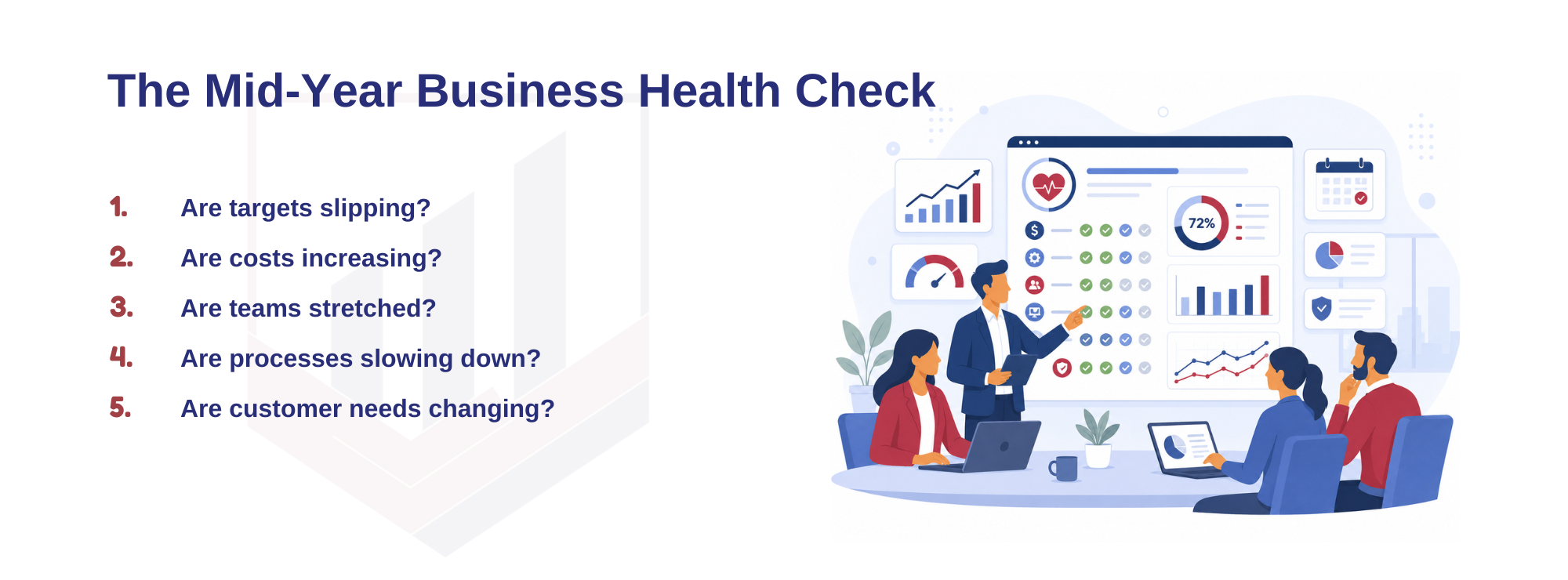
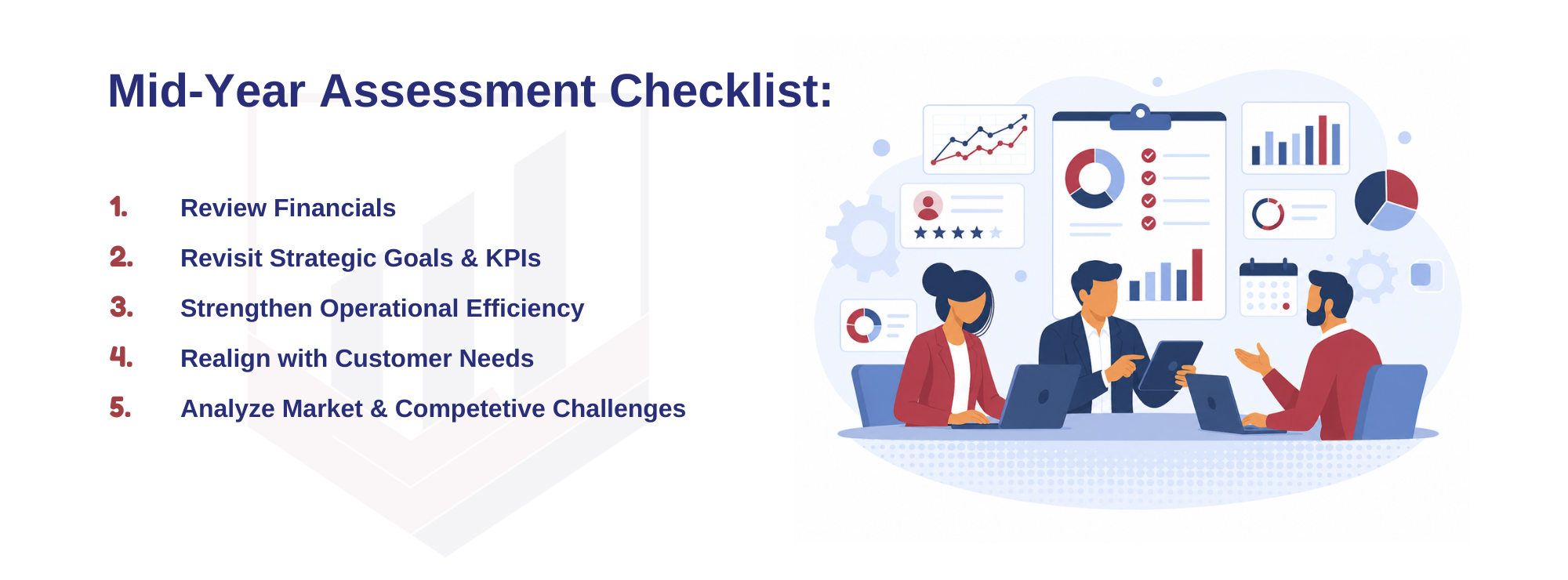
A technology review can also form part of a broader business health check covering operations, finances, workforce capacity, customer performance and risk.
Start with Business Performance
An effective technology health check should begin with business goals rather than a list of applications and devices. The central question is whether the company’s technology services are delivering measurable business value.
Can employees complete tasks efficiently and with fewer errors? Can teams access accurate information without duplicate data entry or manual workarounds? Are customers receiving prompt and consistent responses? Can management obtain reliable information for decision-making?
If employees regularly wait for applications to load, manually transfer information between systems or contact technology support about recurring problems, the current environment may not be meeting operational needs.
Technology services should be evaluated according to their effect on productivity, customer service, operational efficiency, risk reduction and revenue. Salesforce research has found that positive service experiences increase the likelihood of repeat purchases, while poor service can cause customers to switch brands. Slow systems and ineffective handoffs can therefore affect customer retention and future revenue.
Why Technology Services Are a Business Investment
Technology services are sometimes viewed mainly as an operating expense. In practice, dependable technology support can protect margins, reduce risk and enable growth.
Reliable and properly integrated systems reduce the time employees spend waiting, re-entering information, chasing approvals and correcting preventable mistakes. Cloud platforms, collaboration tools and automation can improve efficiency, but only when they are selected, configured and supported around actual business requirements.
This is where technology consulting becomes valuable. A technology consultant can assess operational challenges, identify system limitations and recommend improvements aligned with business objectives. The goal is not simply to introduce new software but to ensure that technology investments solve specific business problems.
There is also a strong financial case for proactive technology support. Uptime Institute reported that 54% of respondents said their most recent significant outage cost more than $100,000, while 16% reported costs exceeding $1 million. Four out of five respondents said their latest serious outage could have been prevented through better management, processes or configuration.
Effective technology support should do more than respond after a system fails. It should identify root causes, prevent recurring incidents and improve the overall reliability of the technology environment.
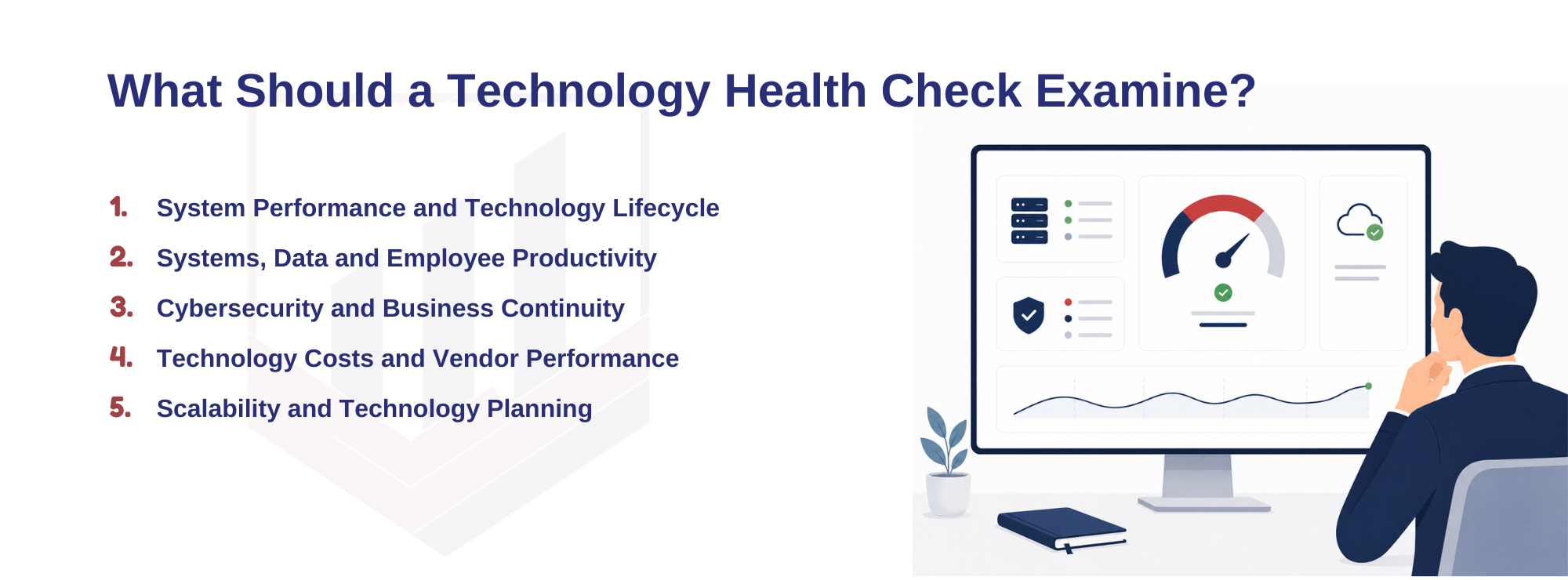
What Should a Technology Health Check Examine?
A technology health check should review the systems, support arrangements, security controls and technology plans that affect day-to-day business performance.
System Performance and Technology Lifecycle
Frequent slowdowns, outages, unstable networks, failed integrations and repeated support tickets may indicate that technology is consuming time rather than creating value.
The review should identify recurring problems, outdated hardware, unsupported software, expiring licences and systems approaching the end of their useful life. This helps businesses address reliability issues and plan upgrades before failures disrupt operations.
Systems, Data and Employee Productivity
Disconnected systems can force employees to transfer information manually, maintain duplicate records or rely on spreadsheets to complete routine work.
A technology health check should assess system integrations, data accuracy, reporting reliability and whether employees have the right tools and training. It should also evaluate whether technology support understands business workflows and resolves recurring problems at their source.
Cybersecurity and Business Continuity
The review should examine software updates, endpoint protection, access permissions, password policies, multifactor authentication and employee security awareness.
It should also assess backup frequency, recovery testing, disaster-recovery procedures and incident-response responsibilities. Technology services should protect the organization from threats while also helping it recover quickly when disruption occurs.
Technology Costs and Vendor Performance
Technology spending should be reviewed for unused licences, overlapping applications, high maintenance costs and services that no longer deliver sufficient value.
The health check should also assess vendor responsiveness, contract terms, service levels and renewal requirements. This helps the business control costs while ensuring that its technology providers continue to meet operational needs.
Scalability and Technology Planning
Current systems may work adequately today but may not support higher workloads, new employees, additional locations or changing customer requirements.
Technology consulting can help determine whether infrastructure, applications and support arrangements are prepared for future growth. The review should conclude with a clear technology roadmap that prioritizes urgent fixes, short-term improvements and longer-term investments.
Turn Findings Into a Practical Technology Plan
A technology health check should produce a prioritized action plan rather than a long list of technical observations.
Urgent actions may include closing security gaps, validating backups, stabilizing essential systems and resolving service issues that affect customers or revenue.
Short-term improvements may include workflow automation, integration fixes, reporting improvements, employee training and the removal of unnecessary or overlapping applications.
Longer-term technology consulting may focus on modernization, scalability, cloud adoption, data management and closer alignment between technology strategy and business growth.
Each recommendation should be evaluated according to business risk, operational impact, cost and expected return. Not every issue requires immediate investment, but leadership should understand which problems are restricting performance and what may happen if they remain unresolved.
How Trinite Supports Business Technology Needs
Trinite’s technology consulting services help businesses assess their requirements, identify system and workflow limitations and implement practical improvements. Its consultants work with clients to strengthen technology environments, improve operational processes and conduct end-user testing before solutions are released.
By combining technology services, ongoing technology support and strategic technology consulting, organizations can address immediate operational issues while preparing for future growth.
A regular technology health check is not about purchasing more tools. It is about ensuring that current systems are reliable, secure, efficient and aligned with business objectives. With the right technology services and support, businesses can improve productivity, strengthen customer experiences, reduce operational risks and build a more scalable foundation for growth.
Get Consultation
Recent Blogs
Partner with us today!


